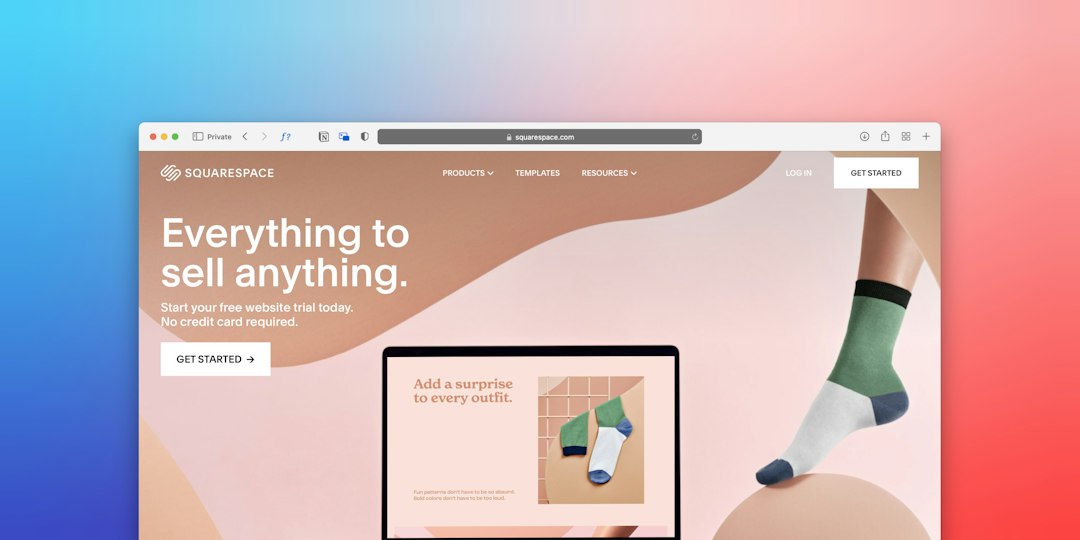
A florist in Manchester runs her whole business from Instagram. Orders come in by DM, payments through a bank transfer link in her bio, and her "menu" is a highlight reel. It works, until Instagram locks her account for 48 hours over a password reset and she loses two weddings' worth of enquiries. That's the quiet risk at the heart of the website vs social-only debate.
You don't need a website to start a business in 2026. You probably do need one to grow it, protect it and sell to people who aren't on your favourite app. This guide walks through when social is genuinely enough, when it isn't, and how to build a lean site that actually pulls its weight.
Key takeaways
- Social-only works for very early-stage, local or hobby-scale businesses, but caps your growth and exposes you to platform risk.
- A website gives you owned search traffic, higher-trust buyers, better conversion tracking and a place where email, ads and reviews all point.
- You don't need a 20-page site. Five well-built pages beat a huge template nobody updates.
- The website vs social-only choice isn't either/or: the best setup is a small, fast site that your social content feeds into.
- Budget for hosting, updates and content from day one, or your site will quietly rot within a year.
What "social-only" actually means in 2026
Social-only usually means one of three setups:
- A single Instagram, TikTok or Facebook page where you post, take DMs and send payment links.
- A Linktree-style page in your bio that lists services, prices and a WhatsApp button.
- A marketplace shop (Etsy, Depop, Vinted, Amazon) plus a social account that drives traffic to it.
All three can make real money. The problem isn't the revenue, it's the ceiling and the fragility. You are renting your storefront, your customer list and your discovery engine from a company whose incentives change every quarter.
If your business disappeared tomorrow because one platform suspended your account, you don't have a business yet. You have a page.
That's the lens to use for every decision in this article.
When social-only is genuinely enough
There are honest cases where a website is overkill, at least for now.
- You're testing an idea. You've been selling for under three months and you're still figuring out what people actually want to buy.
- You're hyper-local and booked out. A mobile dog groomer with a full diary from Instagram DMs doesn't need a site to find more work she can't do.
- Your product lives on a marketplace. If 95% of your buyers come through Etsy's search, your energy belongs in listings, not a separate shop.
- You're a creator, not a business. If sponsorships and platform payouts are your income, your "product" is the audience itself.
Even in these cases, buy your domain name now. It costs about the price of a coffee per month and stops someone else taking your brand when you're ready.
The quiet costs of staying social-only
People underestimate what social-only actually costs them:
- Time spent answering the same five questions in DMs because there's no FAQ page.
- Lost sales from customers over 40 who won't buy from a bio link.
- No remarketing pixel, so your paid ads (if you run them) can't learn.
- No email list, so every launch starts from zero reach.
- No Google presence, so "[your service] near me" sends traffic to competitors.
If two or more of those sound familiar, you've outgrown social-only whether you've admitted it or not.
When you've outgrown social-only
Here are the signals that it's time to build.
- You're turning away work or losing sales because people can't self-serve information.
- You want to run paid ads and need a proper landing page and tracking.
- You're being asked for invoices, terms, or anything that makes you look like a "real" company.
- You sell to other businesses, and buyers Google you before replying.
- Your average order value is high enough that trust matters more than vibes.
- You want to sell while you sleep, including to people in other time zones.
The moment buyers need to trust you with more than a tenner, a website stops being optional. A plumber quoting for a 4,000 bathroom refit will lose to the competitor with a clean site, a few case studies and verifiable reviews, every time.
What a minimum viable website looks like
You don't need a huge site. You need a small one that does five jobs well: explain, prove, convert, rank and track.
Here's a lean structure most small businesses can launch in two to four weeks.
The five pages that do 90% of the work
- Home. One clear sentence on what you do and for whom, a hero image or short video, three trust signals (reviews, logos, numbers), and one obvious next step.
- Services or Shop. Each service or product gets its own section with outcomes, price range or starting price, and a call to action.
- About. A short story, your face, and why you care. This page converts more than people think, especially for service businesses.
- Proof. Case studies, testimonials, before-and-afters, or a Google and Trustpilot widget. If you're not sure how reviews factor in, our breakdown of how the Trustpilot TrustScore actually works is a good starting point.
- Contact. A short form, your email, a phone number if you take calls, and either a booking link or response-time promise.
For deeper thinking on which pages pull the most weight, see our guide to pages that turn visitors into enquiries.
If you sell physical products, swap or add in a proper shop and read the online shop checklist for 2026 before you build.
What you can safely skip at launch
- A blog with 20 placeholder posts. Start with three useful ones.
- A team page if it's just you.
- Live chat that nobody mans.
- Fancy animations that slow the site down.
- A newsletter signup if you have no plan to send emails.
Ship the small site. Add the rest when real usage tells you what's missing.
Why websites still outperform social for conversions
Social is excellent at discovery and awful at closing. A website is the opposite.
Think about what a buyer does when they're ready to spend money. They open a new tab, type your name, and look for three things: proof you exist, proof you're good, and the easiest way to pay you. A social profile gives them one of those three, maybe two on a good day.
Specifically, a website gives you:
- Owned search traffic. Showing up for "wedding photographer Leeds" costs you nothing per click once you rank. A social post reaches people for 48 hours and vanishes.
- Higher-intent buyers. Someone searching for your service is further down the funnel than someone scrolling a feed.
- Real conversion tracking. You can see which traffic source, page and offer actually makes money.
- A home for email, ads and reviews. Every channel benefits from pointing somewhere credible.
- Trust at a glance. A 2026 buyer can spot a Linktree disguised as a business in under five seconds.
Say a local bakery runs a Meta ad for custom cakes. Sending that ad to Instagram gets a profile visit and maybe a follow. Sending it to a dedicated landing page with photos, pricing bands and a booking form gets enquiries the same day. Same budget, different outcome.
Speed, mobile and the boring stuff that decides whether it works
A website only beats social-only if people can actually use it. Three technical basics matter more than any design choice.
Load time
If your site takes more than three seconds to load on mobile 4G, you're losing a chunk of visitors before they see a single word. Compress images, use a modern host, and stop installing plugins you don't need. Our website speed optimization guide walks through the fixes that actually move the needle.
Mobile layout
Somewhere between 60% and 80% of your traffic will be on a phone, depending on your industry. Design for a thumb first and a laptop second. Read our take on mobile-first website design if you're starting from scratch.
Hosting and upkeep
A website isn't a one-off purchase, it's a small asset you maintain. Expect to spend some time (or a small retainer) each month on:
- Software and plugin updates
- Backups you've actually tested
- Broken link checks
- Swapping out old photos and testimonials
- Watching analytics for pages that quietly break
Skip this and within a year you'll have a slow, insecure site that converts worse than the social profile you were trying to escape.
Do you need a custom web app, or just a website?
Most small businesses don't need a custom web app. They need a good website with a few off-the-shelf tools bolted on, like a booking system, a payment processor and an email platform.
You might genuinely need a custom build if:
- Your service involves logged-in users doing something unusual (a calculator, a dashboard, a marketplace between two sides).
- You're handling data or workflows that no existing SaaS handles well.
- Your competitive edge is the product itself, not just the marketing around it.
Even then, start with the cheapest possible version. A spreadsheet, a form and a human doing the work in the background will teach you more in a month than a six-month development cycle.
A practical plan you can start this week
If the website vs social-only question has been sitting in your head for months, here's a sequence that works.
- Day 1. Buy your domain and a business email on that domain. Stop using a Gmail address for client work.
- Day 2. Write one sentence that explains what you do, for whom, and what makes you different. This becomes your homepage headline.
- Day 3. Collect five pieces of proof: reviews, screenshots, before-and-afters, numbers.
- Day 4. List every question you get asked in DMs. These become your FAQ and service page copy. If you need inspiration, our guide to interviewing customers in DMs helps.
- Day 5. Pick a lean stack: a modern site builder or a developer who'll ship in weeks, not months.
- Week 2. Build the five core pages. Keep copy tight. One call to action per page.
- Week 3. Hook up analytics, a contact form that emails you, and a Google Business Profile.
- Week 4. Launch. Point your social bios at the site. Keep posting on social, but make the site the destination.
You are not retiring from social. You are giving it somewhere to send people.
Where Henify fits in
If you'd rather not DIY, our website and online shop packages cover design, build, hosting and the ongoing upkeep most owners quietly skip. We aim for small, fast sites that convert, not 40-page templates you'll never update.
Whichever route you take, the goal is the same: stop renting your entire business from a platform that doesn't know your name.
FAQ
Can I really run a business on Instagram or TikTok alone?
You can, and plenty of people do, usually in the early stages or in highly visual niches. The risk isn't that it doesn't work, it's that it caps your growth and leaves you one account suspension away from starting over. A simple website removes that single point of failure.
How much should a small-business website cost in 2026?
Prices vary wildly depending on scope, country and whether you build it yourself. A DIY site on a modern builder can cost very little per month. A professionally built small-business site is a bigger one-off investment plus ongoing hosting and maintenance. Budget for the upkeep, not just the build, or you'll regret cutting that corner.
Website vs social-only for SEO: does it actually matter?
Yes. Social profiles rank for your brand name and little else. A website can rank for the things people actually search when they're ready to buy, like "emergency electrician Bristol" or "vegan birthday cake delivery". That's traffic you own and can grow over time.
How many pages do I really need to launch?
Five is plenty for most service businesses: home, services, about, proof and contact. Shops need product and category pages on top. Launch small, watch what visitors actually do, then add pages where real demand shows up.
Should I keep posting on social once I have a website?
Absolutely. The strongest setup is social for discovery and a website for conversion. Your posts, reels and DMs feed traffic to a site that closes the sale, captures emails and shows up in Google. Think of them as teammates, not alternatives, and the website vs social-only question stops being a question at all.